Job Search Ops
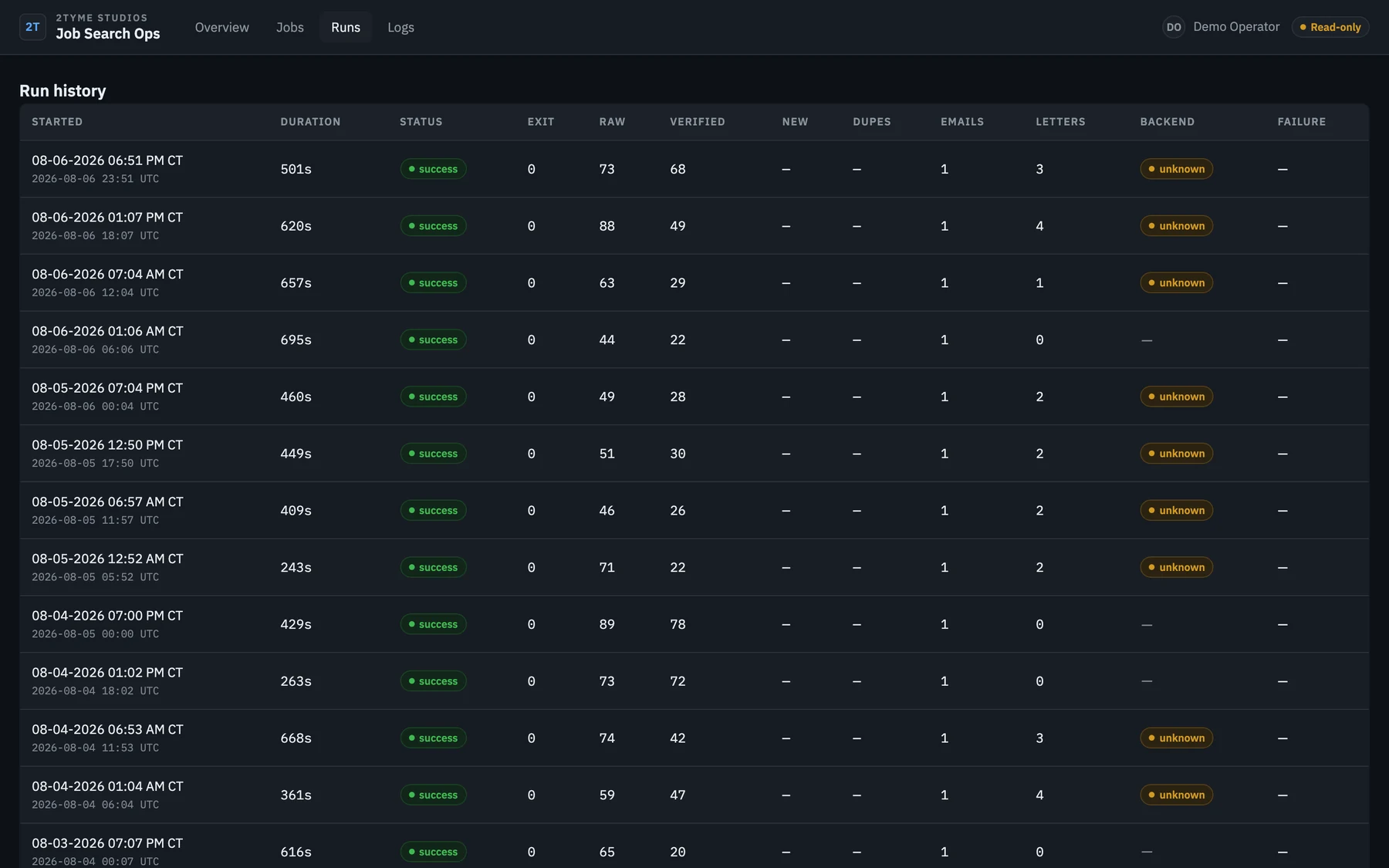
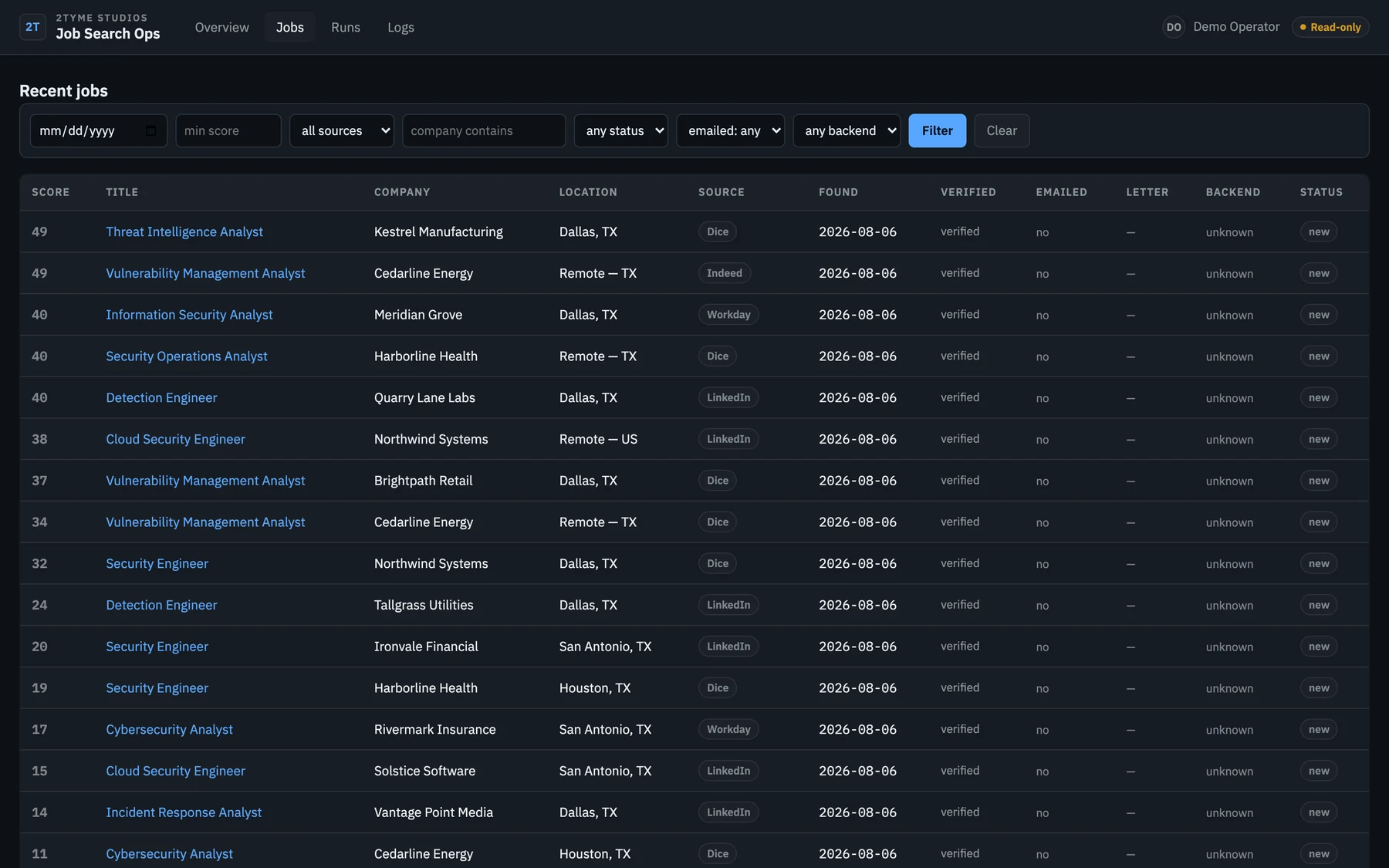
A pipeline that collects postings from five sources, deduplicates, scores and tiers them, tracks them, and prepares the paperwork — then stops and lets a person send it.
2Tyme product
The problem
The repetitive half of a job search — finding openings, checking they are still live, judging fit, and keeping track — done on a schedule, with a read-only operations view over the whole thing.
The thinking
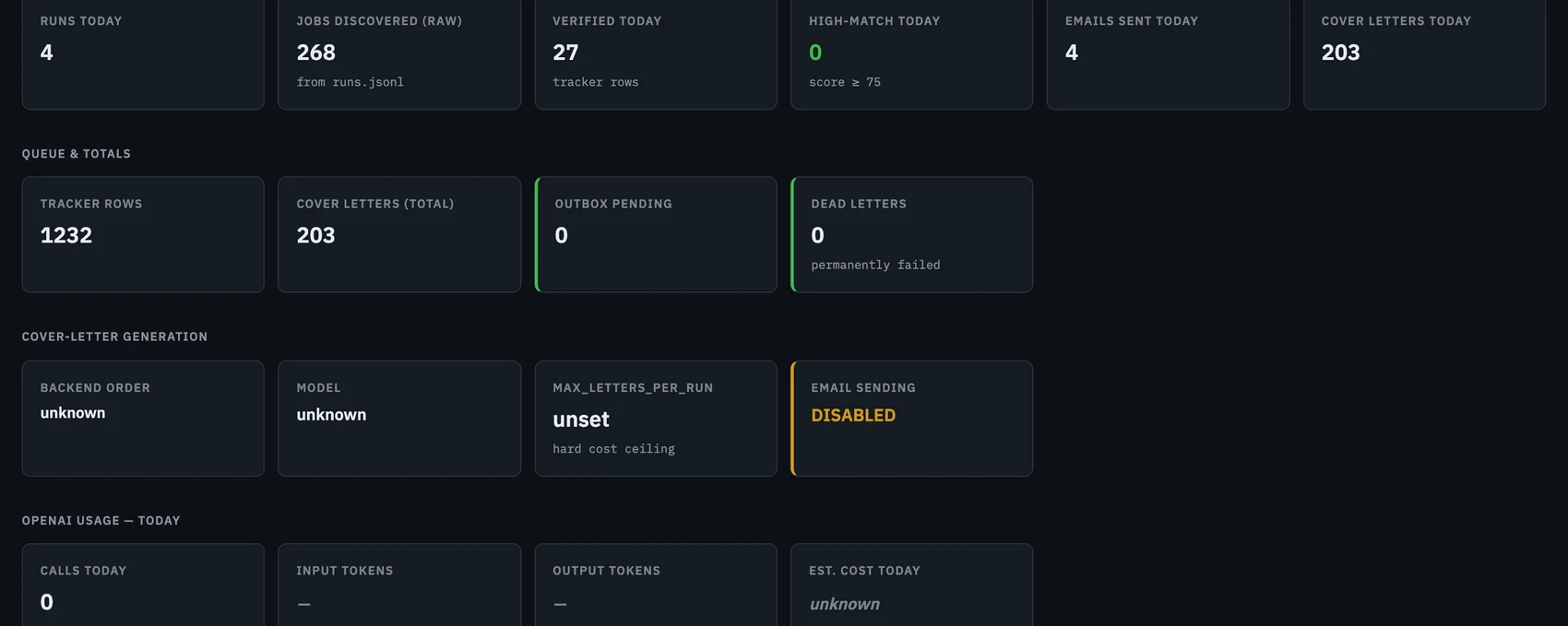
Multi-source ingestion, deduplication against everything already seen, a rule-based 0–100 match score with tiering, run history with measured throughput, and a queue that prepares cover-letter work for review.
The system
It runs twice a day and writes to a tracker rather than acting. The dashboard is read-only by construction — mode=ro on the database connection, no POST routes at all — because an ops view that can mutate production is a liability, not a feature.
Built with
What it proves
Multi-source ingestion, deduplication against everything already seen, a rule-based 0–100 match score with tiering, run history with measured throughput, and a queue that prepares cover-letter work for review..
Our own system. It never submits an application — it finds, scores, organises and prepares, and a person sends it. Screens run against an anonymized demo dataset that keeps the real scoring distribution; no real employers or applications.
Now build yours.